Showing posts with label my mother's green thumb. Show all posts

Sunday, August 28, 2011

Evening primrose

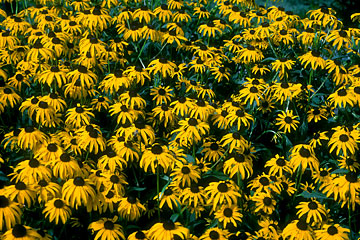
Following from my last post about the need for a color infusion into the late summer garden, my mind was going back to the bordering-on-neon flowers that my mother used to grow.  She always kept a small patch for favorite wildflowers, among them tall yellow-blooming evening primrose Oenothera sp.  I started doing a little on-line research about evening primrose and learned that most available are short biennials grown from seed.  That's not what I was looking for!


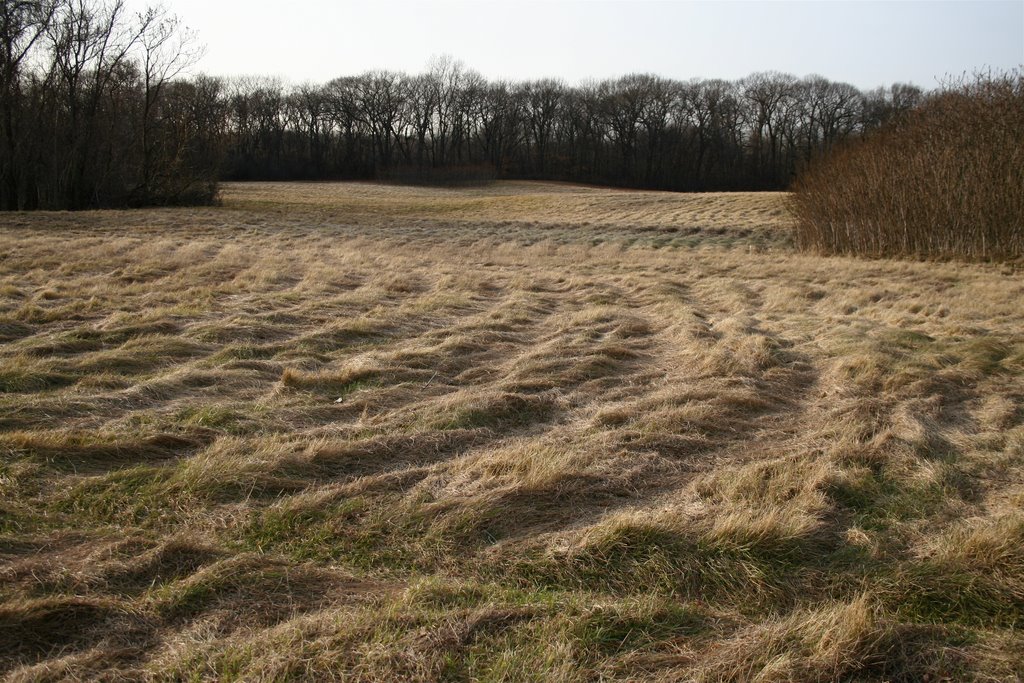
So I was delighted the next day to literally stumble across the tall variety lining the trail through the Great Meadows National Wildlife Refuge in Concord.  Oh, the unexpected joy of serendipity!


The banks were thick with evening primrose.  I'm still confused about their habitat: my mother would grow them in partial shade and on-line accounts indicate a preference for drier soils; these however were flourishing in exposed wetlands.  More research is in order.  And, eventually, perhaps, a supplier of plants as well as seeds.  (Our rabbits are enjoying anything grown from seed way too much these days.)


Even if I never figure out how to grow them in my own yard, I'll know where to go to find them in the wild.


Saturday, July 03, 2010

Hard pruning


"This thing is out of control," groused my husband as he slipped under a spray of "New Dawn" rose canes blocking his entry through the kitchen door.  "What the heck are you feeding that?" asked my neighbor from his yard next door.  "Yikes!" I thought when I saw the tussle of rose blossoms clambering up to a second floor window.


Such was the impetus for my most despised gardening activity: rose pruning.  I have to admit--as if I could claim otherwise in the flowery face of the evidence--that I had kind of let things go.  A couple of years, I really couldn't prune because I didn't want to disturb the birds nesting in the arbor.  Another year, it was just too dang hot.  My mother, an excellent rosarian, was no longer around to take up the task.   Meantime, canes sprouted, curved, flopped, and grew some more.


With several days of cool, clear weather forecast, I set to pruning every evening after work.  After more than five hours teetering on a ladder and after accumulating over five bags of clippings, I can say that I'm done.

It was hard to prune, and I pruned darn hard. My mother's rallying cry--"Whack it out!"--spurred me along.  She was a ferocious rose pruner--my tender-hearted father couldn't even bear to be around when she was wielding her clippers--and every time that I wondered WWMD, I knew the answer was cut, cut, cut.
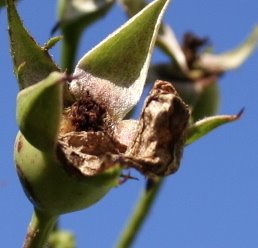

Anything that was where it shouldn't be was snipped off.  (Almost all) distorted canes were removed.  Deadwood was clipped.  New canes were tied to the arbor.  A good 1 1/4 cup of Rose-Tone was scratched in around the roots.

And then, among the debris of shorn branches, there was even the thank you of a few last blooms!

Saturday, September 27, 2008

Bulb choices, the slightly political version

Bulb selection continues. To help assess which varieties of tulips, irises, and daffodils partner best, I pull together image files from suppliers' on-line catalogues. This spring, a sloping side bed should sport these bulbs, courtesy of John Scheepers.


As I was busily dragging and dropping--and wondering how folks made these visual comparisons back before computers--I recollected the wonderful bulb books that my mother used. These were 5 x 8-inch ring binders with each page illustrating a different bulb. The paper was heavy and glossy, the colors were saturated, and the names were exotic ("Queen of the Night," "Princess Irene," "Trevithian"). Even for a kid, this was intriguing stuff.


You could open the binder, remove pages, and lay them out like playing cards next to each other, bundling together "Cheerfulness," "Sweetness," and "Tete a Tete" into a friendly group, or spicing up the scene with a dash of "Adonis."


A big box of the bulb books arrived at our house every spring. Sales of the featured bulbs supported my mother's college alumnae association. She was a tireless volunteer: many an evening she'd sit at the kitchen table, telephone to ear, as she extolled the virtues of these bulbs to her garden club colleagues. She'd drive from house to house, dropping off and picking up bulb books and, a month later, delivering bulb orders. My mother must have been pretty darn good at the gentle art of persuasion--she was a native Washingtonian, after all--because her alumnae association rewarded her efforts with a Dutch trip to enjoy the gardens at Keukenhof, the Aalsmeer flower auction, and Haarlem flower parade. Here she is, in April 1976, posing with two equally elegant companions in the Castle Garden at Keukenhof.


I'll side-step the obvious political observation about the skills and capabilities of alumnae from Southern women's colleges. My mother would have dodged it, too. And then gone out to work in her garden.

Sunday, November 18, 2007

Raking

Raking leaves is fall's familiar task. Here's how it was conducted in the Maryland suburbs, circa 1918: by well-dressed toddlers who had not quite mastered the finer points of how to operate their equipment.


Both of these apprentices--my mother and her sister--grew up to become accomplished gardeners. Maybe it was all those years devoted to perfecting their skills.

Up here in New England, the raking season is in full stretch and swing. Trees have shed about half of their leaves. Following the economy of effort school of gardening, I like to combine lawn mowing, yard waste removal, and leaf mold production into a single activity.


In other words, after running my mower a few times through the leaves I've piled up, I dump the shredded leaves onto my compost pile. There is never enough room for all this good stuff, so I stashed some of the excess in a tin tub before bagging the remainder for local composting.


Yes, as if the night frosts and short days didn't sufficiently spell out the season, fall has definitely arrived.

Monday, November 12, 2007

Fall fruits, writ small

One of my tasks this weekend was to fertilize broadleaf evergreens: hollies, rhododendra, and pieris. According to "Horticulture," this feeding should be done about two weeks before the first frost. Since we hit hard below freezing last night, I figure that I'm late with my chores, as usual. I use about 5 lbs of HollyTone in the fall and close to 10 pounds in the spring.

As I walked from bush to bush--stopping along the way to sprinkle a few handfuls of fertilizer on a bed of pachysandra or over the lilies of the valley--I realized that this garden contains a lot of plants with berries and that those berries fruit in all colors.


Earlier this year, when the front foundation plantings were renovated, my savvy sister-in-law suggested Ilex meserveae "Blue Princess" and "Blue Prince" for this north-facing elevation. These berries testify to the happy home and compatible relationship these hollies have found.

Nearby grow a couple of black-berried Ilex crenata "Chesapeake." How could a Maryland native not honor a variety named after the Bay? Although maybe this holly would prefer a more southern clime, as it is terribly vulnerable to winter kill and begs for a hard pruning every spring.


Another Japanese holly that fares better is this large, late blooming Heller's variety Ilex crenata hellerii. It is just now sporting tiny creamy flowers.


Some of the first bushes that we planted 15 years ago were American hollies, both red-fruited female Ilex opaca "Christmas Tree" and, for company, a yellow-berried male Ilex opaca, variety forgotten.


Some of my favorite hollies are a pair of sparsely fruiting Ilex opaca. These two American hollies were among six softwood cuttings that my mother took a decade ago from hollies growing freely on my in=laws' Cape Cod property. Glossy, well-formed foliage--but all of three berries!

Monday, May 28, 2007

Memorial day

On this Memorial Day, I took a rest from my on-going battle against the Japanese knotweed invasion to remember some of the wonderful gardeners, past and present, whose horticultural gifts are flowering in my garden today.

First off, I have from my mother a multitude of lilies of the valley. These grew in an azalea bed next to her house in Maryland. For several years, she allowed me to take a big clump each spring. Now I have so many, they are popping up in my lawn.


Usually, they bloom in early May but this year they are a few weeks late. This woodland phlox (Phlox divaricata) hitched a ride with the lilies of the valley and has found a happy home at the front margin of the same bed.


These bluish mauve columbines were a gift from my work colleague and super New England coastal gardener, TRH, who received them from her father in the Midwest.


And from the same source comes the most hearty yellow iris.


My very horticulturally active sister-in-law kindly gave me a host of bi-colored irises. They bloom more lushly every year.


I am so grateful for all of these heirlooms!

Saturday, February 24, 2007

Double take

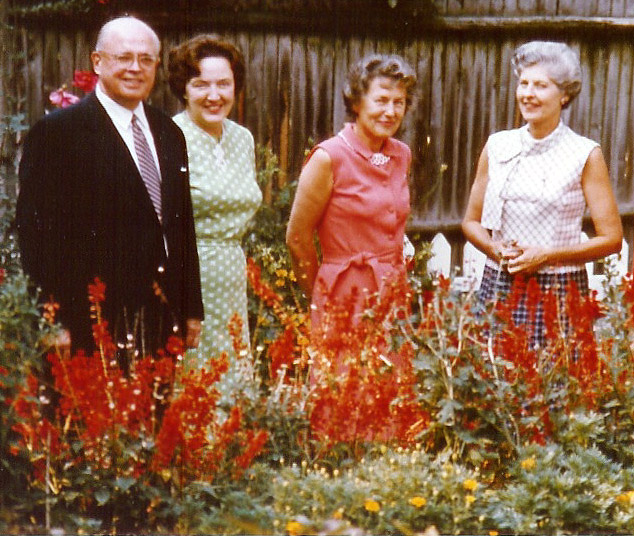
I have strong recollections of my mother's garden. I remember in particular one bed that edged the driveway was planted every summer with a line of red salvia. (Maybe those horticultural horrors contributed to my decision to leave home.) So when I chanced upon this photograph, it brought back memories of the technicolor 1970's. Those ghastly salvia look like the flames of hell. But what would an Antarctic explorer, Washington lawyer, former debutante, and unidentified fellow traveler be doing in a sulfurous place like that? (Drinking bourbon and branch, I suspect.)


So imagine my surprise when I saw another photograph of the same flower bed taken earlier in the same year and from a different angle.


I don't remember any irises in that garden--but there they are--and blooming a cool, subdued shade of lilac. I do recall a dark red peony--and, there is it, too--but when I asked my mother many years later if I could have a division from that plant, she didn't remember it in her garden. Memories can create their own gardens, I guess.

Friday, January 05, 2007

Call of the wild

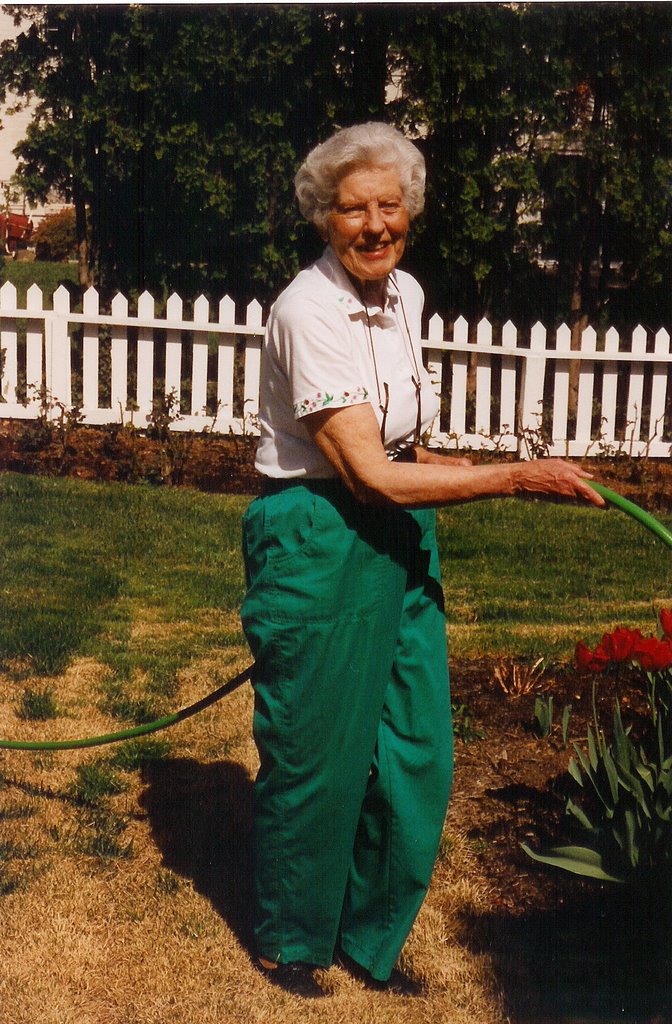
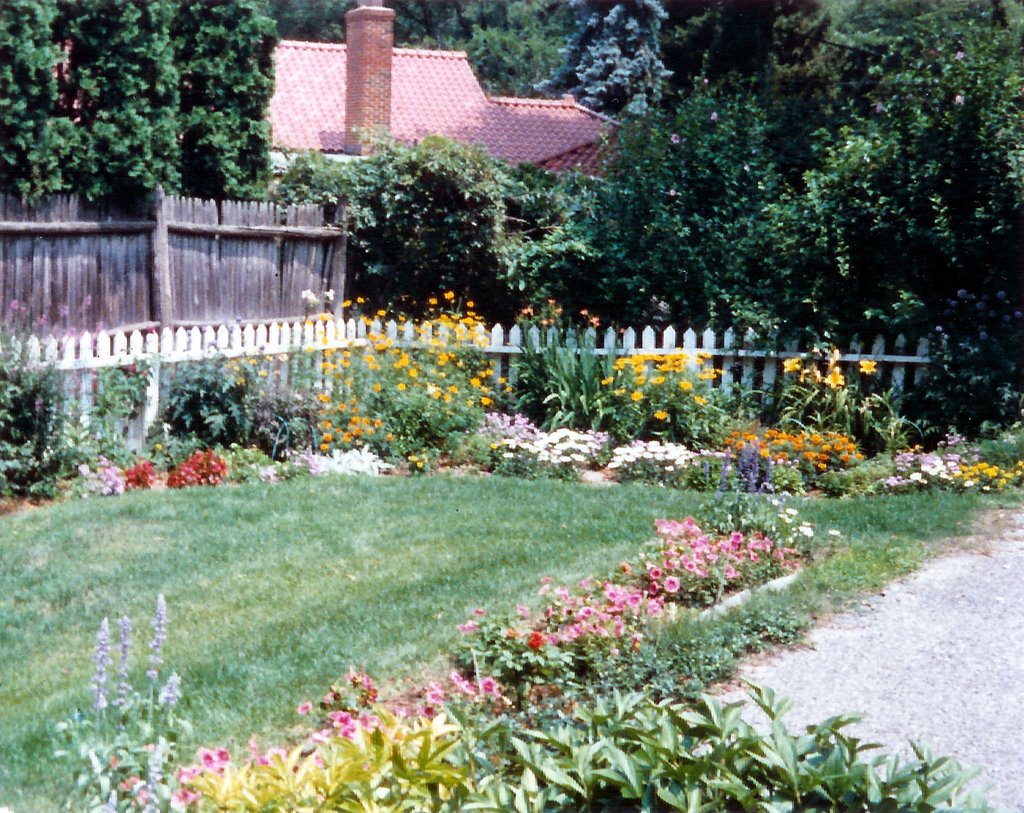
Although constrained by an exceedingly suburban setting and enclosed by a white picket fence, my mother’s garden included a variety of wildflowers. Some of these she selected for personal reasons: a line of bouncing bet (Saponaria officinalis) reminded her of how she teased her older sister, Betty, when they would see that plant growing wild near the New Jersey shore.


Long afternoons spent by the Chesapeake Bay while my father was busy with YMCA camp meetings were commemorated with a few wild columbines (Aquilegia canadensis) transplanted from the sandy woodlands. A little Maryland boosterism may have been the reason for the black-eyed Susans (Rudbeckia hirta), which I remember her stopping the car in order to uproot from the roadside.


(Yes, those were very different plant collecting days back then!) Reasons for other wildflowers in her garden--woodland phlox, purple loosestrife (sterile, of course), evening primrose--elude me. These native plants were on their good behavior in my mother’s garden—they exuded strong presence, bloomed heavily, and rarely strayed. I’ve been thinking that these natives might just have something there. Okay, not the purple loosestrife, but a clump of evening primrose may be in my future.

Wednesday, December 27, 2006

Gardening roots, Part I

When winter arrives, I'm not one of those people who happily turns to domestic tasks. I hate to cook. I don't knit. And I sew only on an "as needed" basis.

But I am fascinated by genealogical research and could happily spend hours organizing papers, entering information in a computerized family tree, and poring through census, civil, and parish records.


So I got to thinking, what about other gardeners in my family? And before the concept of gardening had trickled down to the common folk, what about the plain old farmers--the cultivateurs, labourers, and Bauern--among my ancestors? Here's what I dug up.

In 1634, my eighth great-grandfather settled an eight-acre homestall in what was then Watertown, Massachusetts. His plot, about a half-mile from where I now live, today lies under suburban housing.


Later, he acquired land in the area of Beaver Brook


and Rock Meadow.


There is no record of what he farmed, but presumably this low-lying land served as pasturage. His will, written in 1685, mentions his house, meadow acreage and a barn in Cambridge Farms.

Fast forward about 300 years to my mother, a passionate tiller of her own back quarter acre. Her love of gardening may have grown from spending summers at her aunt's Connecticut house, where daily tasks included picking sweet peas and gooseberries growing next to the barn.


Years later, my mother marveled how it was that ever more flowers and fruit were waiting each morning. I think that realization somehow connected her with the potential of earth, sun, and rain.


Back in her Maryland community, both she and her own mother belonged to the local garden club. Well into her eighties, she could be found spending six or more hours a day in her yard.

My mother was a yes-or-no kind of person, and her garden celebrated that same lack of nuance. She tolerated a few perennials and adored her roses, but through out the summer subsisted on the brightest of brilliantly colored annuals: petunias, salvia, marigolds, zinnias, and dahlias. Her garden was splashed with primary colors, particularly hot pinks, reds, oranges, and yellows. There was no subtle juxtaposition of contrasting textures, shapes, and colors--plants earned a place while in bloom and were expeditiously rooted out upon their decline. Unsentimental, cheerful, and practical. You can learn a lot about a person from looking at her garden.

Tuesday, August 01, 2006

And what about rose pruning?

Although the climbing rose "New Dawn" finished blooming last month--except for the on-going dribble of blossoms that earns this variety its "repeat bloomer" status--I pruned the faded flowers and swelling hips only last weekend.


When my mother was alive, she willingly undertook my rose pruning during her summer visit. An expert rosarian, her own bed of hybrid teas ran in a lazy curve along the back fence of her Maryland yard; ramblers were trellised up the sides of the house. In the summer heat, the scent of cut roses filled her house. Although restrained in her own personal habits, my mother relished fearlessly colorful varieties like "Tropicana," "Blaze," and "Mr. Lincoln."


My mother's cold-blooded conviction with the pruning shears was breath-taking. She ruthlessly pruned out old canes and weak laterals, commenting brusquely, "that will never amount to anything": all canes were cut at the correct angle one quarter inch above an outward-facing group of five or more leaves and new growth was aligned on the trellis.


During the year before my mother's death, her rose garden was untended. Black spot caused leaves to discolor and drop. Canes sprang up with unruly energy. Blossoms withered, and their petals scattered to the ground. Why, I wondered, did she choose to devote her energies to imperious plants so ill-suited to the Maryland heat and humidity? I could well have asked, why garden?

Friday, June 23, 2006

Cora Leich's larkspur

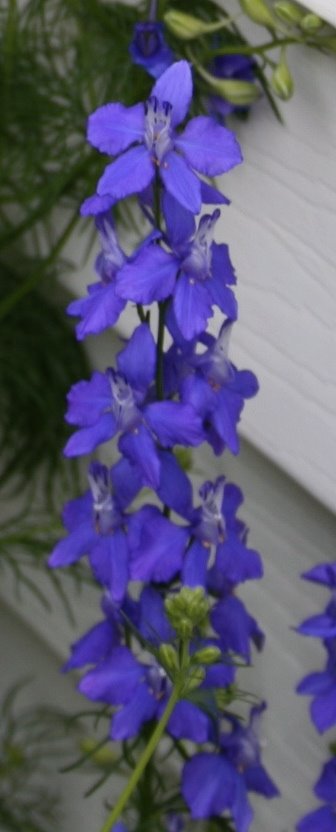
These larkspur are happy interlopers next to the house. The original plant hitched a ride in a clump of shasta daisies transplanted from my mother's Maryland garden. My mother said that she had received the larkspur from a friend, Cora Leich, and that it would grow like a weed. She was right and then some: little larkspur plants can be found popping up in the lawn, sprouting in beds on other sides of the house, and even struggling in the darkness of the window wells.


These plants have an open, pleasantly messy habit with numerous branches and delicate pinate leaves. One variety of larkspur produces deep blue flowers.


The other type blooms pink--just the same shade as the "New Dawn" roses.


What with all this liberal self-sowing, the only challenge is to direct the plants' efforts towards the desired plot of ground. When the seed pods have dried and begun to open, I collect as many seeds as possible. These are stored in the refrigerator until Thanksgiving Day. Half of the seeds are sown directly then and the remainder in early spring. They inevitably crowd themselves and, by late June, only the strong--or well placed--survive. Next year, I am looking forward to recapturing the space so gracelessly taken up by my (big) mistake.

My recollection may not be accurate, but I think that Cora Leich died about thirty years ago.

Sunday, June 04, 2006

Peony in a suitcase

Five or six years ago, when my mother asked me what she could bring during her annual trip up north from Maryland, I replied that I would really like to have a division from one of the peonies lining her driveway. She had tended a row of seven or eight peonies during her forty-five years in that Chevy Chase house, and I loved watching as every spring the maroon peony stalks emerged, their deep red foliage turned green, and shell pink blossoms erupted from their tight round buds.


After not a small amount of badgering, my mother reluctantly agreed to bring up a division. She packed it carefully in a hard-sided suitcase and checked it as luggage on her flight north. The day after her arrival, she planted the peony in my garden. Her gardening skill was unerring: the peony was blooming the next year and still holds pride of place.

Every spring, I dust with a copper fungicide when the stalks are about three inches high, claw in a handful of bonemeal and 1/4 cup of 10-10-10 around the roots, and stake with a metal ring support. After the foliage dies in the fall, I trim the stems back to about 1 inch and fertilize with more bonemeal.

Last spring, before my mother sold her house, I asked my older brother to take some more peonies. He transplanted several clumps into his Laurel yard. In late July, I stopped there to collect a few during the long drive back north after my mother's memorial service and burial in Virginia. After being twice moved in six months, they looked pretty miserable by the end of the summer. However, this spring, the familiar maroon stalks emerged. A blessing and a gift.