Showing posts with label chevy chase. Show all posts

Wednesday, March 30, 2011

Cherry blossom time

Tidal Basin view, 2011

Growing up near the nation's capital, cherry blossoms were the joyful harbinger of spring. Even though the trees encircling the Tidal Basin are the best known blooms, there are masses planted throughout the area.

By the Basin, 2011

With these other trees, you could celebrate your own private cherry blossom festival: flowering branches arched over the sidewalk on the way to school, trees lined the streets of a nearby community, and a specimen brightened the backyard. If you climbed to the top of a tree in bloom, you would find yourself floating on a frothy pink sea. The fallen petals could be tossed like confetti.

Somerset Elementary School, Chevy Chase, 1998

It felt like old times to catch a glimpse of these pink flowers on a recent trip to Washington.  But then, on returning home to Massachusetts, I realized that I keep a reminder of a mid-century Maryland childhood on the walls and in the curtains of my bedroom and master bath. These cherry trees are always in bloom . . . and, marvel of nature, fruiting at the same time!

Schumacher and Co. cherries


Wednesday, February 06, 2008

Digital dilly-dallying

Of course, working in a museum, I love old photographs. Lantern slides, glass plate negatives, gelatin silver prints: they're all good; and when the subject is gardens, even better.

The Archives of American Gardens at the Smithsonian Institution contains 80,000 images documenting contemporary and historic gardens. The core collection is 3,000 glass lantern slides from the 1920's and 1930's. Bliss! On a winter's evening, how pleasant to wander through the searchable database and stop to smell the virtual flowers. Best of all, you can direct your path by searching for gardens in particular places and times.


On my first trip to this database some years ago, I found several images of the Chevy Chase, Maryland, garden of renown rosarian, Whitman Cross. From the marginalia for this photograph, the rambler so happily sprawling over the stone wall on a sunny afternoon in late May, 1930, appears to be "Dr. W. van Fleet." When I showed these photographs to my mother, she told me that Mr. Cross, who lived just around the corner from her, had 2,000 roses growing in his half-acre suburban yard. Among them was the dark red rambler, "Chevy Chase," and I've wondered since if the deep crimson rose that my mother trellised by our back door was an homage to her childhood neighbor.

Sunday, November 18, 2007

Raking

Raking leaves is fall's familiar task. Here's how it was conducted in the Maryland suburbs, circa 1918: by well-dressed toddlers who had not quite mastered the finer points of how to operate their equipment.


Both of these apprentices--my mother and her sister--grew up to become accomplished gardeners. Maybe it was all those years devoted to perfecting their skills.

Up here in New England, the raking season is in full stretch and swing. Trees have shed about half of their leaves. Following the economy of effort school of gardening, I like to combine lawn mowing, yard waste removal, and leaf mold production into a single activity.


In other words, after running my mower a few times through the leaves I've piled up, I dump the shredded leaves onto my compost pile. There is never enough room for all this good stuff, so I stashed some of the excess in a tin tub before bagging the remainder for local composting.


Yes, as if the night frosts and short days didn't sufficiently spell out the season, fall has definitely arrived.

Saturday, February 24, 2007

Double take

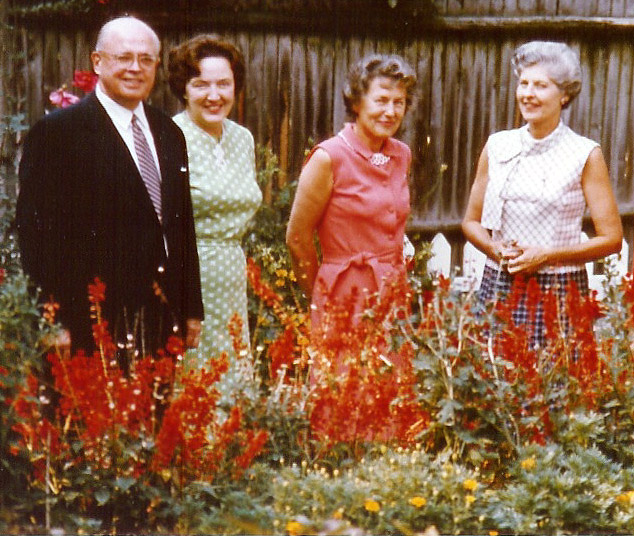
I have strong recollections of my mother's garden. I remember in particular one bed that edged the driveway was planted every summer with a line of red salvia. (Maybe those horticultural horrors contributed to my decision to leave home.) So when I chanced upon this photograph, it brought back memories of the technicolor 1970's. Those ghastly salvia look like the flames of hell. But what would an Antarctic explorer, Washington lawyer, former debutante, and unidentified fellow traveler be doing in a sulfurous place like that? (Drinking bourbon and branch, I suspect.)


So imagine my surprise when I saw another photograph of the same flower bed taken earlier in the same year and from a different angle.


I don't remember any irises in that garden--but there they are--and blooming a cool, subdued shade of lilac. I do recall a dark red peony--and, there is it, too--but when I asked my mother many years later if I could have a division from that plant, she didn't remember it in her garden. Memories can create their own gardens, I guess.

Wednesday, December 27, 2006

Gardening roots, Part I

When winter arrives, I'm not one of those people who happily turns to domestic tasks. I hate to cook. I don't knit. And I sew only on an "as needed" basis.

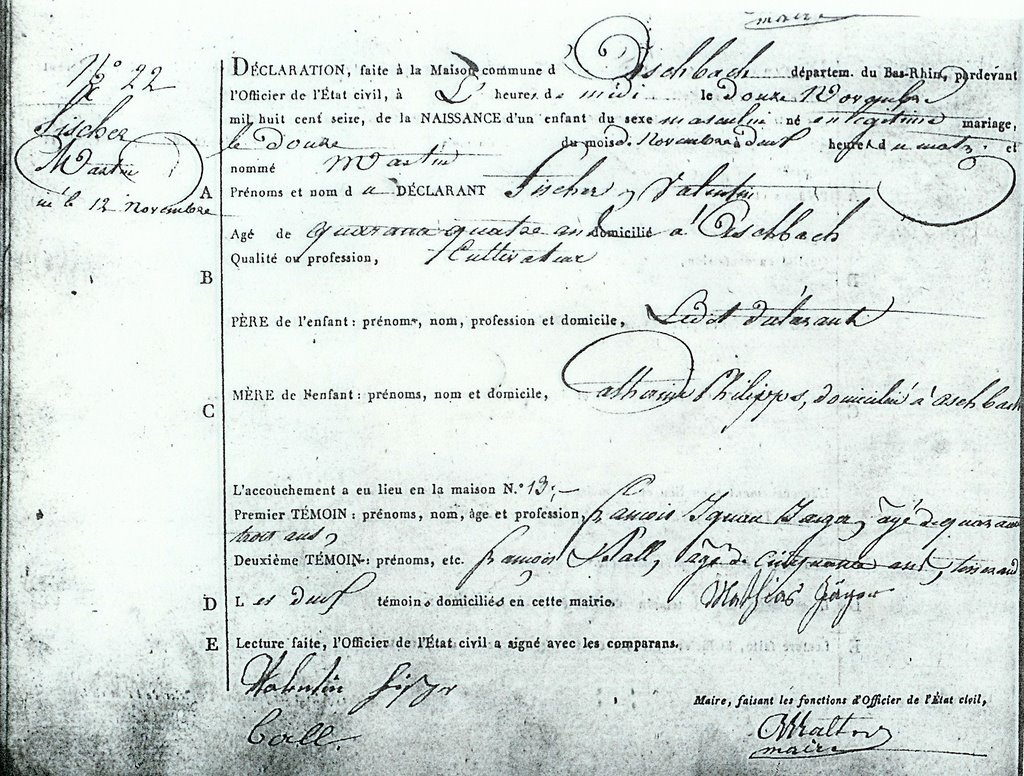
But I am fascinated by genealogical research and could happily spend hours organizing papers, entering information in a computerized family tree, and poring through census, civil, and parish records.
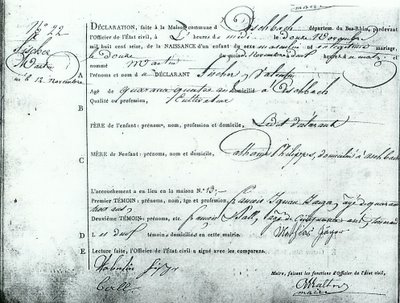


So I got to thinking, what about other gardeners in my family? And before the concept of gardening had trickled down to the common folk, what about the plain old farmers--the cultivateurs, labourers, and Bauern--among my ancestors? Here's what I dug up.

In 1634, my eighth great-grandfather settled an eight-acre homestall in what was then Watertown, Massachusetts. His plot, about a half-mile from where I now live, today lies under suburban housing.


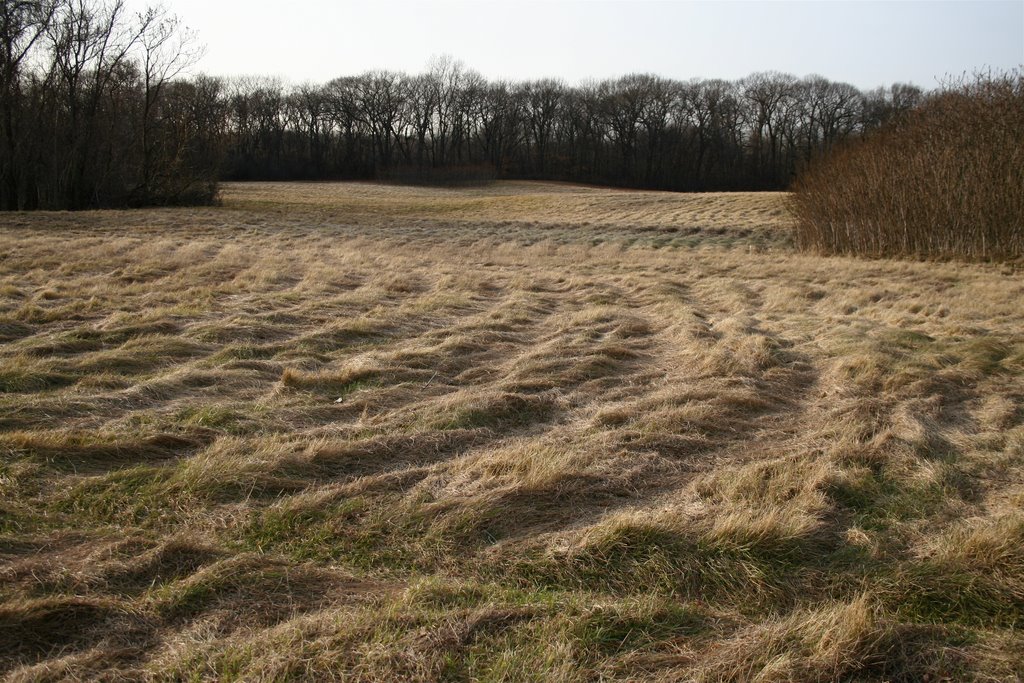
Later, he acquired land in the area of Beaver Brook


and Rock Meadow.


There is no record of what he farmed, but presumably this low-lying land served as pasturage. His will, written in 1685, mentions his house, meadow acreage and a barn in Cambridge Farms.

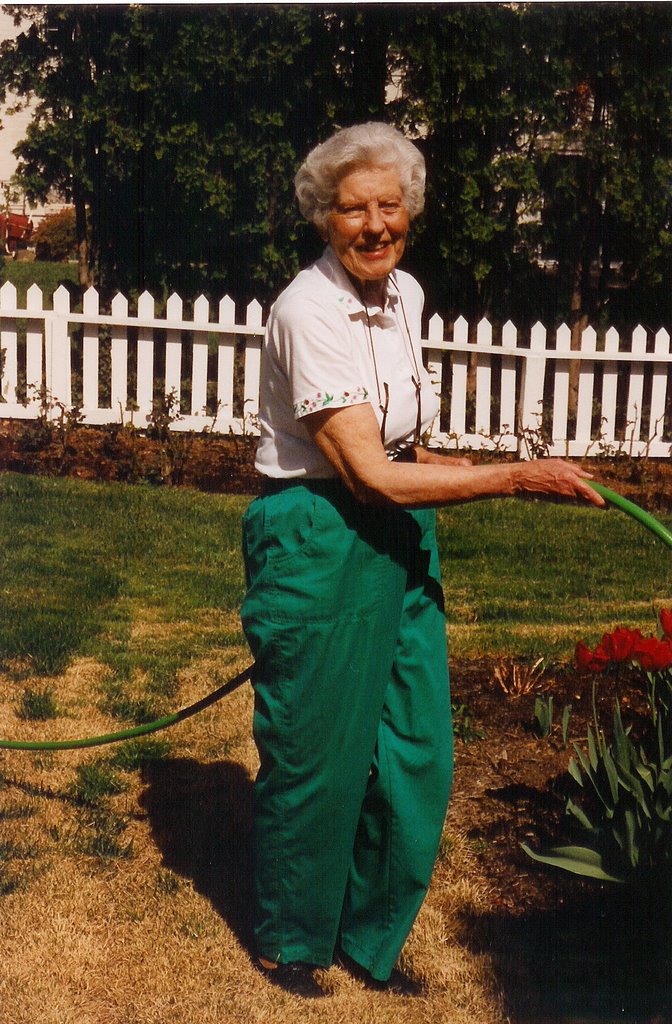
Fast forward about 300 years to my mother, a passionate tiller of her own back quarter acre. Her love of gardening may have grown from spending summers at her aunt's Connecticut house, where daily tasks included picking sweet peas and gooseberries growing next to the barn.


Years later, my mother marveled how it was that ever more flowers and fruit were waiting each morning. I think that realization somehow connected her with the potential of earth, sun, and rain.


Back in her Maryland community, both she and her own mother belonged to the local garden club. Well into her eighties, she could be found spending six or more hours a day in her yard.

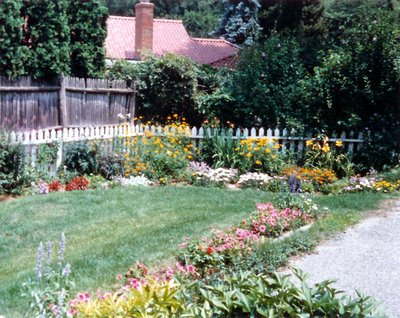
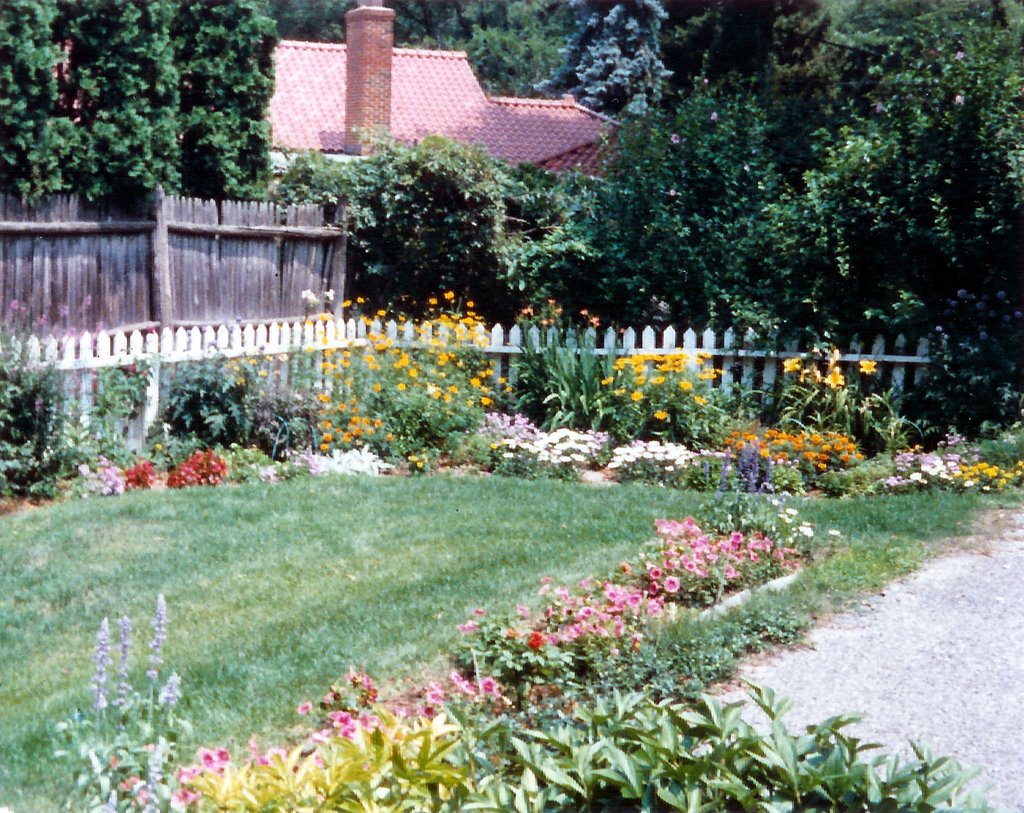
My mother was a yes-or-no kind of person, and her garden celebrated that same lack of nuance. She tolerated a few perennials and adored her roses, but through out the summer subsisted on the brightest of brilliantly colored annuals: petunias, salvia, marigolds, zinnias, and dahlias. Her garden was splashed with primary colors, particularly hot pinks, reds, oranges, and yellows. There was no subtle juxtaposition of contrasting textures, shapes, and colors--plants earned a place while in bloom and were expeditiously rooted out upon their decline. Unsentimental, cheerful, and practical. You can learn a lot about a person from looking at her garden.