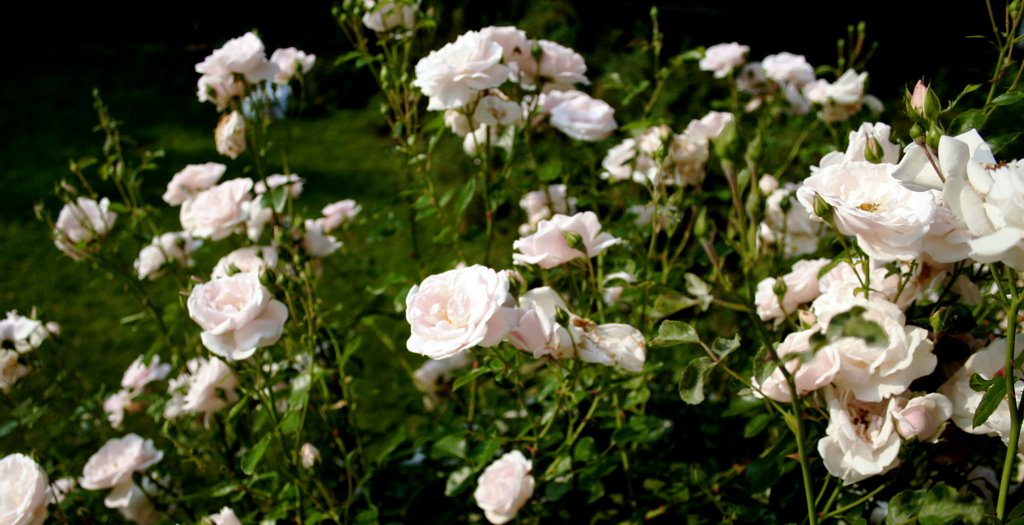
As with Briar Rose's castle, in past years, the canes have insinuated themselves into the windows. Come October, putting in the winter storm windows becomes a serious challenge.
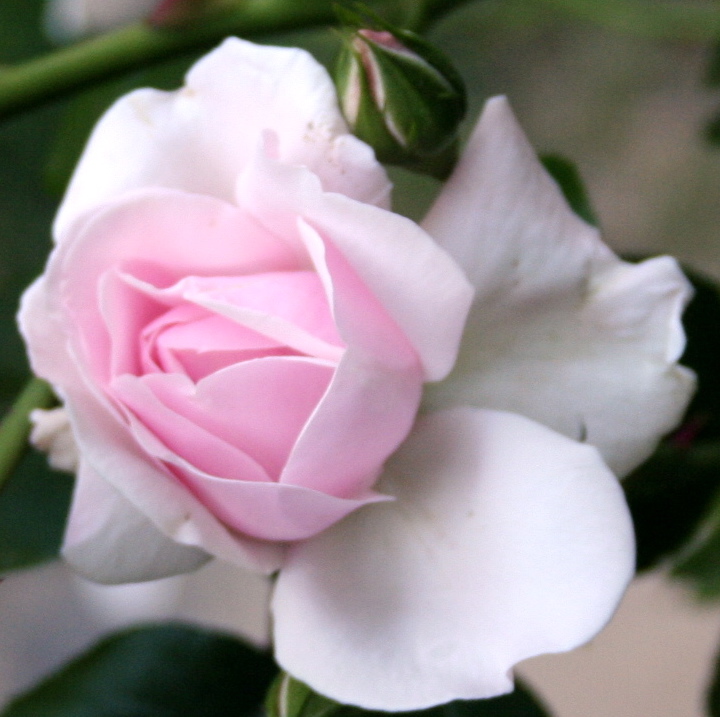 My rose care is straight-forward. Every spring and fall, I dowse with 1/4 cup epsom salts dissolved in two cups of water. On the first of the month from June to September, I claw in 3/4 cup of Rose-Tone. If the leaves exhibit yellowing, which I think is chlorosis caused by lime in the adjacent foundation, I toss on a few handfuls of chelated iron. After the New Year, I winter mulch the base with evergreen boughs.


2 comments:
I have recently purchased two New Dawn climbers on-line and am anxiously awaiting their arrival. I have never grown roses before and am worried that I will do something to hurt rather than help my roses thrive. You mention several maintenance things you do using products I have never heard of. Do you have any advice for a novice gardener, living in the Ottawa area of Ontario (Zone 4), 6 hours of afternoon sun, and without a clue what I'm doing. Help!
Hi There!
My major advice has to do with garden practice rather than products:
1. Stop fertilizing a month before your first frost so that cold weather doesn't kill any new growth. I stop fertilizing here in mid- or late August.
2. Later in the fall, tie up the canes to your climbing support and prune back the laterals--the smaller branches that grow out of the upright canes--to about 3-4 inches in length, with an angled cut just above a leaf node. This will prevent damage from winter winds, to you as well as the plant. It's no fun to be whipped with a thorny rose cane! Also, the growth will be appear more even and tidy in the spring if it starts from a plant that's been shaped uniformly in the fall.
3. Be sure to winter mulch after the ground has frozen. I lost one "New Dawn" the year that I failed to mulch. If you mulch too early, rodents and the like may nest in the mulch. I loosely pile up old Christmas tree boughs over the base of plant to the height of about 8 inches. I've also used seaweed and pine needles for this purpose--okay, what can I say--I'm cheap and not afraid to publicly collect nature's cast-offs--but salt marsh hay would also work.
Have fun!
Post a Comment