Thursday, January 25, 2007

Dahlia daze

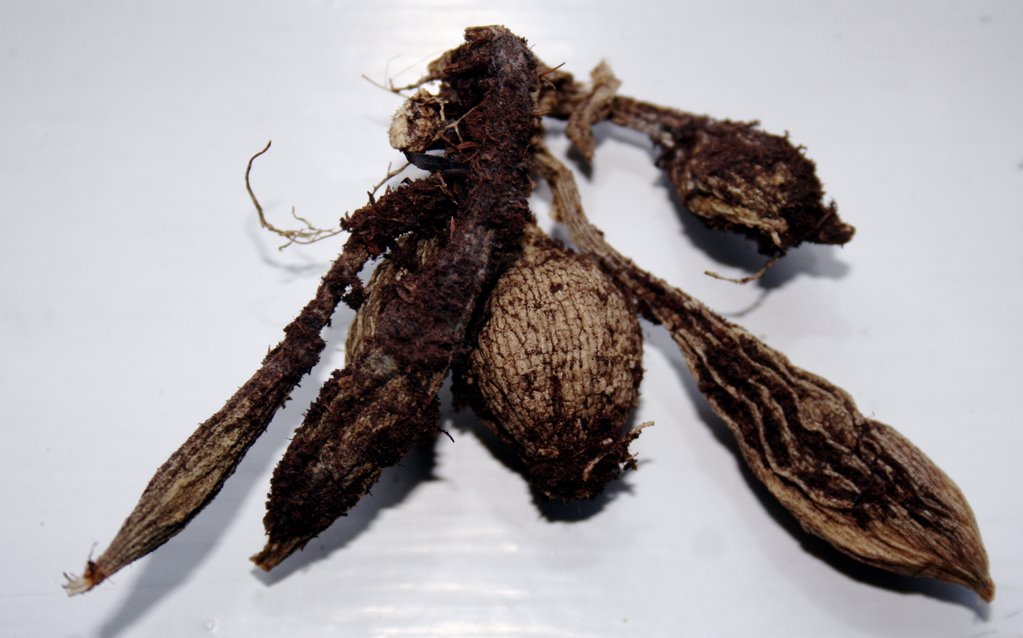
Is this how dahlias should look during their winter hibernation?


These tubers' withered appearance sent me running to learn more about the world of dahlias . . . and what a vertiginous world it is! Dahlias in all shapes, sizes, and colors: flowers as large as a dinner plate or as small as a golf ball; blooms with exploding needle-like petals or rolled in a tight pompom; reds, pinks, yellows, and every color combination!

Overwhelmed by the factorial number of choices, I knew that I needed some hands-on learning: more dahlias will join the yellow- and pink-flowering plants that I'm hoping to return to the new side bed this spring. But which variety?

I started looking for a dahlia that blooms small but not too small ("Nicole C") . . . and that's orange, but not too orange ("Andrie's Orange") . . . and a little coral but not too coral ("Hamiton Lillian") . . . with color that's saturated but not too saturated--and, please, not too loosely petaled ("Baron Kati") . . .

I finally settled on an award winner ("Rose Toscano" from Lobaugh's Dahlias) . . .


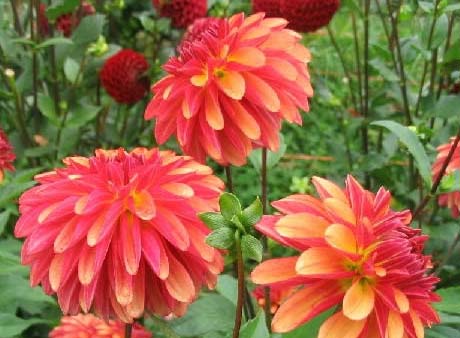
But its shape seemed somewhat boring--too much like a zinnia--so I've added another ("Snickerdoodle" from Swan Islands Dahlias) with a more spirited presence . . .


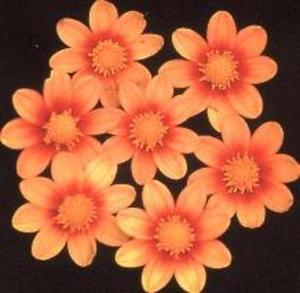
. . . and then I caught sight of the sweetest little flower ("Matthew Juul," also from Lobaugh's Dahlias) and had to have that, too . . .


Happily, a single plant--or two or three--casts a tiny ripple in the vast ocean of dahlia varieties, so there will be many more to sample in the future.

Wednesday, January 17, 2007

Strategies for January

How to pull through the gloomy days of winter:

1. Thank the catalog companies for saving one's sanity with those over-the-top plant porn photos. Despite my resulting fantasies (to the extent allowed to a middle-aged member of "God's frozen people"), I've ordered only tobacco "Perfect Mix" (Nicotiana x sanderae) from Select Seeds and sweet pea "Old Spice" (Lathyrus odoratus) and evening primrose (Oenothera biennis) from Johnny's Selected Seeds. I am sticking to seeds that can be direct sown in the garden.

Okay, I did slip for a fuchsia "Gartenmeister Bonstedt," too. Caught me.

2. Turn the compost pile. At least, that thing is steaming!

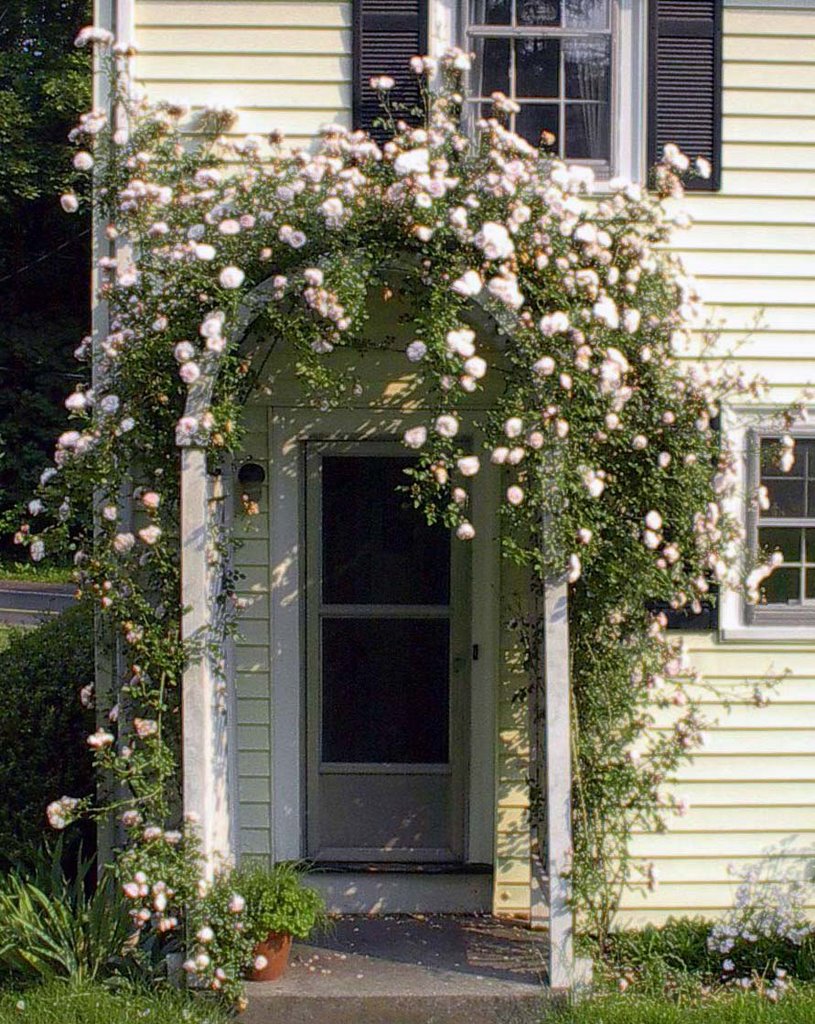
3. Mulch the rose and peonies with boughs lopped off the Christmas tree on its way out the door. Finally, the ground has frozen, so it's time to insulate those roots under a deep spruce blanket.

4. Dream of summer . . .

Sunday, January 14, 2007

Drinking buddies

Last year, I caught wind that the good folks at Cornell University College of Agricultural and Life Sciences had discovered a novel way to reduce the height of forced paperwhites.


Oh, those clever undergraduates! And, oh, those dark, bleak winter days in upstate New York!

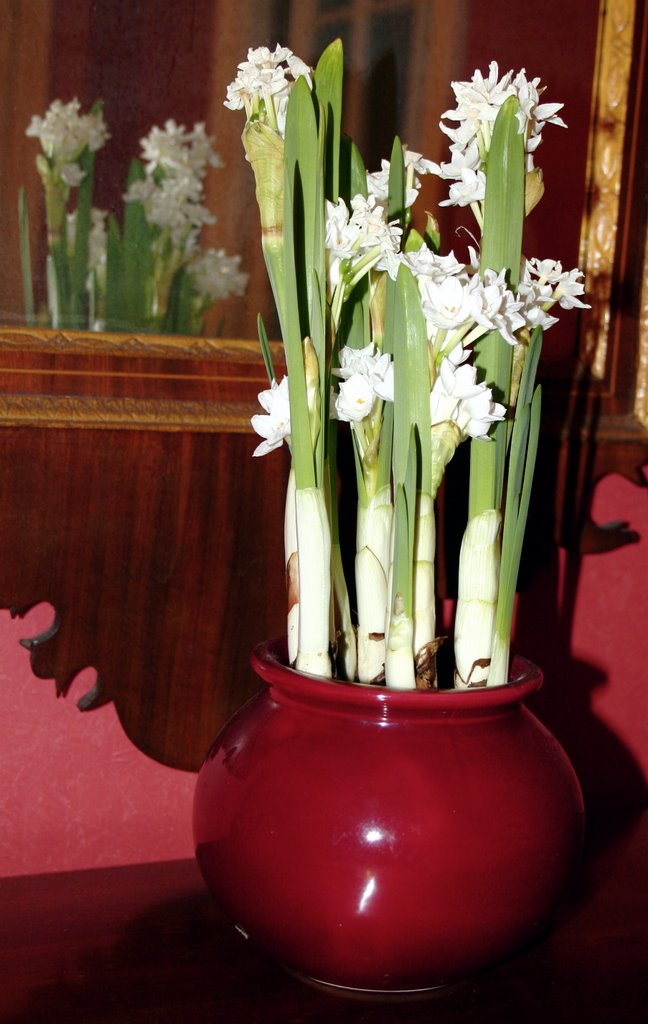
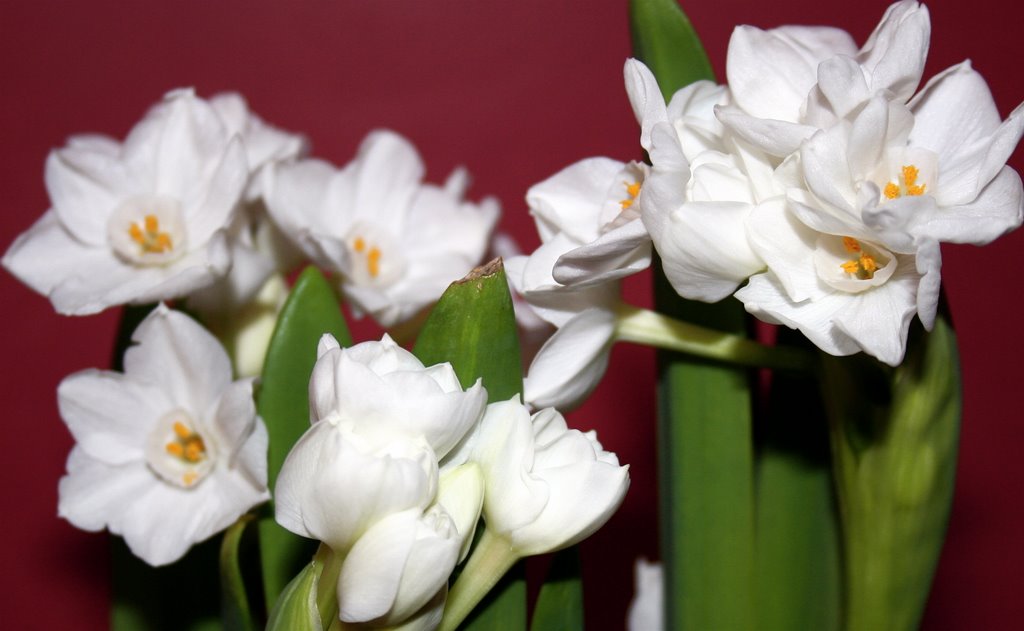
When their water is replaced with a dilute solution of one's favorite alcoholic beverage, the paperwhites grow to about half their regular height. (I can't speak to the effect on undergraduates.)


But, is that a good thing? I think the decision comes down to a philosophical stand, with safety and practicality on one side balancing grace and risk on the other.

Practicality:
1. The plants don't lean towards the nearest light source and then pitch over. No discoveries of top-heavy paperwhites tumbling from their planting bowls to the floor.

Grace:
1. The plants lack their long-stemmed, albeit precarious, beauty.
2. Some of the slower-growing or secondary buds wither before blooming.
3. Is it my imagination, or is the blooming period shorter?

Data-collection and decision-making continues.

Friday, January 05, 2007

Call of the wild

Although constrained by an exceedingly suburban setting and enclosed by a white picket fence, my mother’s garden included a variety of wildflowers. Some of these she selected for personal reasons: a line of bouncing bet (Saponaria officinalis) reminded her of how she teased her older sister, Betty, when they would see that plant growing wild near the New Jersey shore.


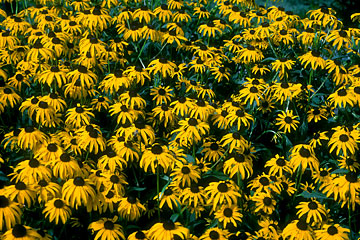
Long afternoons spent by the Chesapeake Bay while my father was busy with YMCA camp meetings were commemorated with a few wild columbines (Aquilegia canadensis) transplanted from the sandy woodlands. A little Maryland boosterism may have been the reason for the black-eyed Susans (Rudbeckia hirta), which I remember her stopping the car in order to uproot from the roadside.


(Yes, those were very different plant collecting days back then!) Reasons for other wildflowers in her garden--woodland phlox, purple loosestrife (sterile, of course), evening primrose--elude me. These native plants were on their good behavior in my mother’s garden—they exuded strong presence, bloomed heavily, and rarely strayed. I’ve been thinking that these natives might just have something there. Okay, not the purple loosestrife, but a clump of evening primrose may be in my future.

Friday, December 29, 2006

Gardening roots, Part II

Prune off those lawyers, lobbyists, and politicians, and my father sprouted from a farming tradition.

His grandfather from Aschbach, Alsace, was listed as a farmer on the manifest of the ship that brought him to New York in 1868 and again on the 1880 marriage license that united him with a Prussian farmer's daughter in Edwardsville, Illinois.

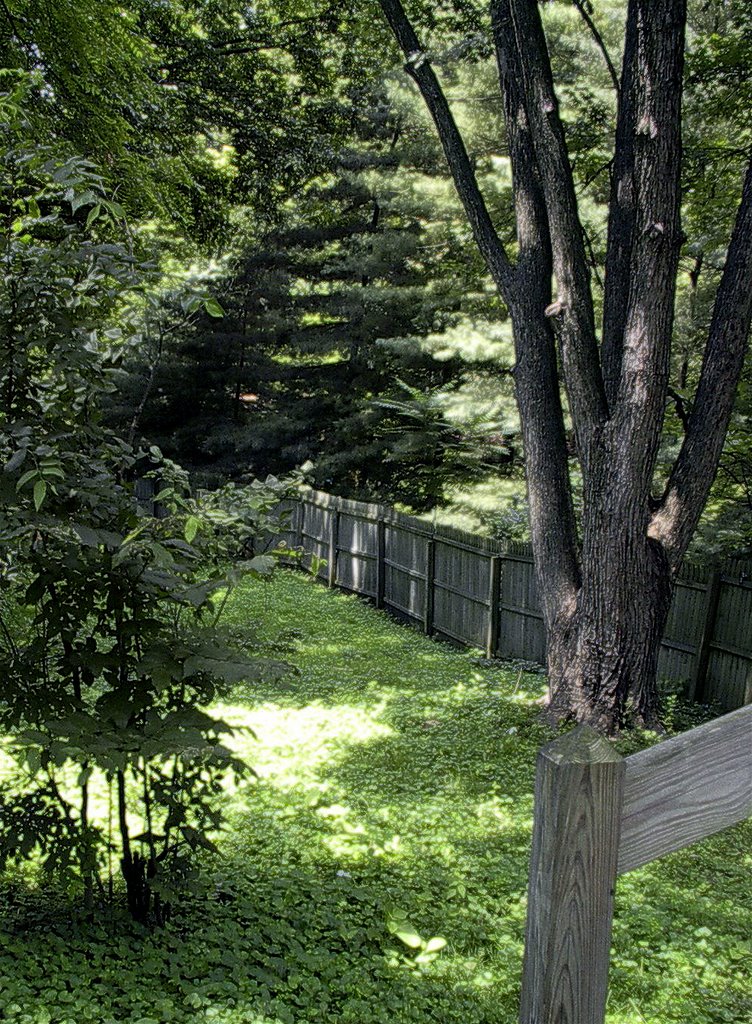
The narrow wedge backyard of the home that they built is now overrun with ground ivy. Who knows what it looked like a hundred years ago?


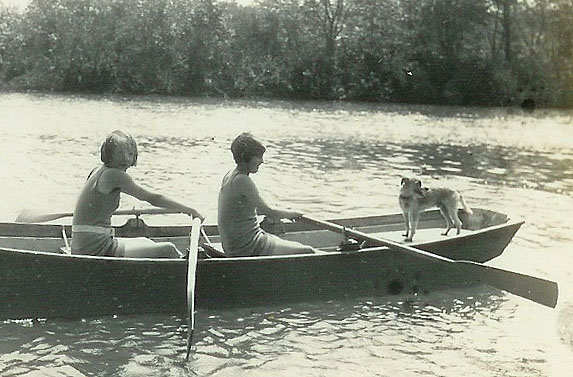
On another branch of my father's family tree, here's what my great-great aunt Annie had to say about how she and her sister, my great grandmother, Lillie, handled lawn care in 1880's Edwardsville:

Most of the home place was in bluegrass, especially the front yard where it grew high at times. Then it was mowed with a scythe. No lawn mowers then. On one occasion after it had been mowed, a number of spears of grass were left standing here and there. This was very disorderly according to my notion, and I resolved to remedy it. Securing a hatchet and Lillie’s aid, I began. The hatchet was dull, and the spears of grass were tough, so we took turns about, one using the hatchet and the other holding the spears of grass taut. When it was Lillie’s turn to wield the hatchet her force was better than her aim; consequently she nearly severed my big toe. We were both barefooted. The blood flowed freely, and we both ran into the house, Lillie doing most of the screaming as she thought she had mortally wounded me. The only thing else that I remember of this incident is that I sat with my foot in a wash-bowl of water all of the afternoon and that I chafed at the confinement and at the interruption of my interesting task.

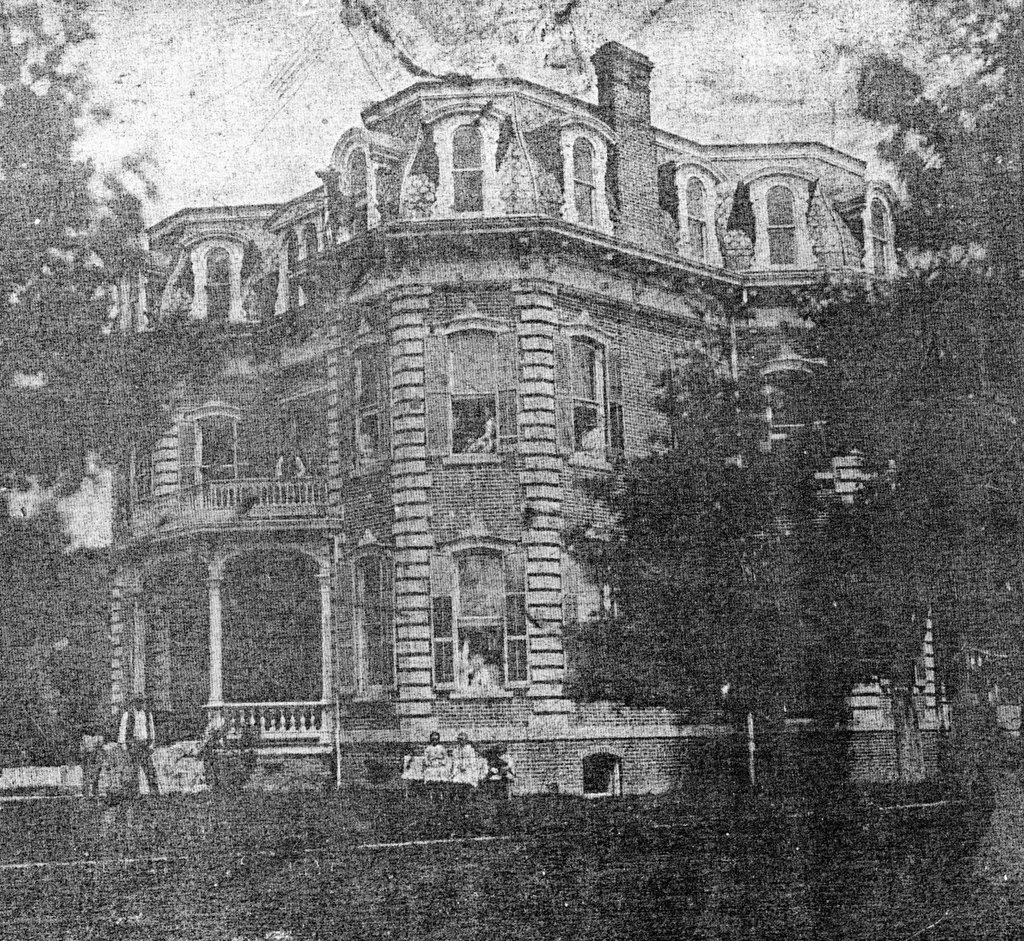
Perhaps the two gardeners are just visible in the upstairs windows of the home place in this 1880's tintype.


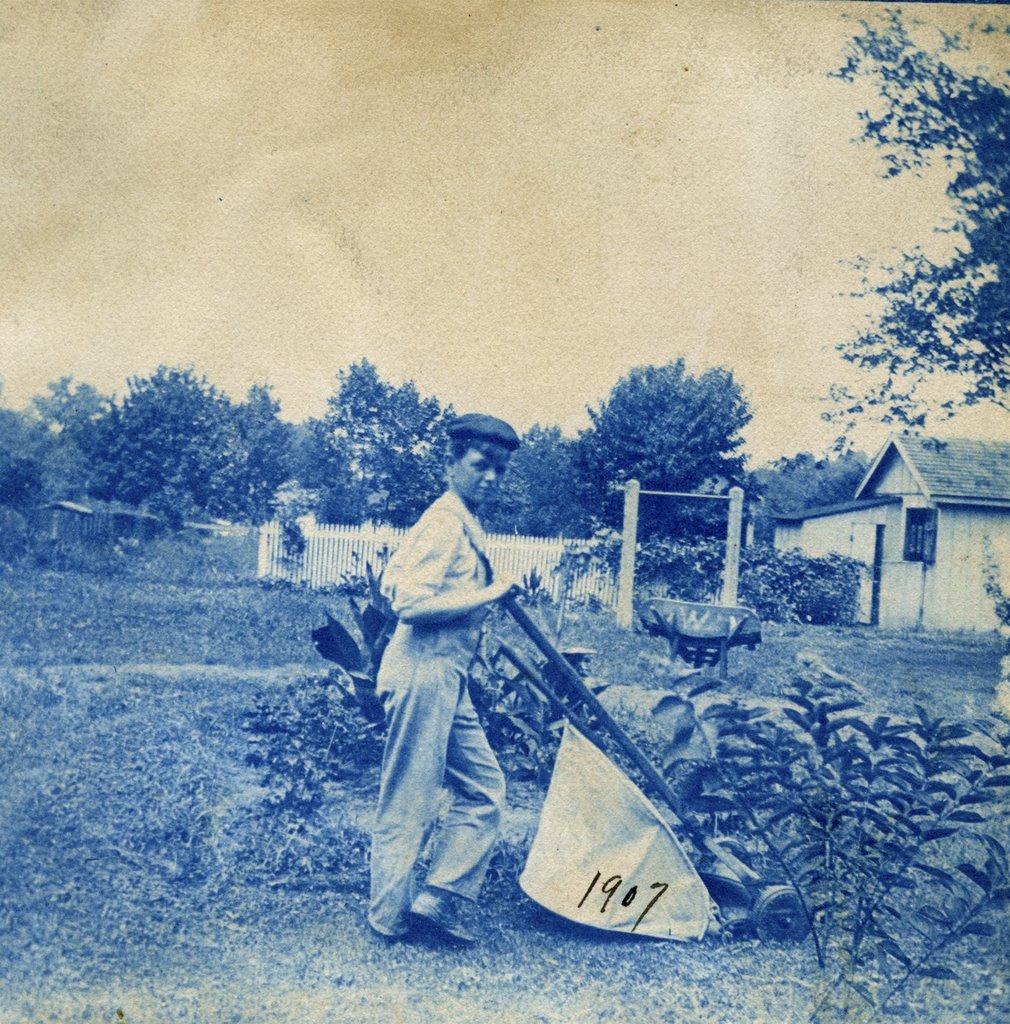
Twenty years later, in 1907, their nephew, Billie, was pushing a reel mower around that Edwardsville lawn.


And in 1913, my one-year old father was wading in a midwestern sea of grass.


While the children were tackling the lawn, the adults busied themselves with flowery pursuits. Sometimes, it was difficult to untangle the two, as my great great aunt, Annie, wrote:

Papa once had a special flower bed and he threatened to whip the next child who trod on it. The next day, when Mamma left the print of her foot in it, he didn’t know what to do. At dinner he said, “Mamma, after all my trouble, Alfred has stepped on my flower bed.” Mamma had to own up, since Alfred, our [hired] . . . man wore about number 13 shoes.

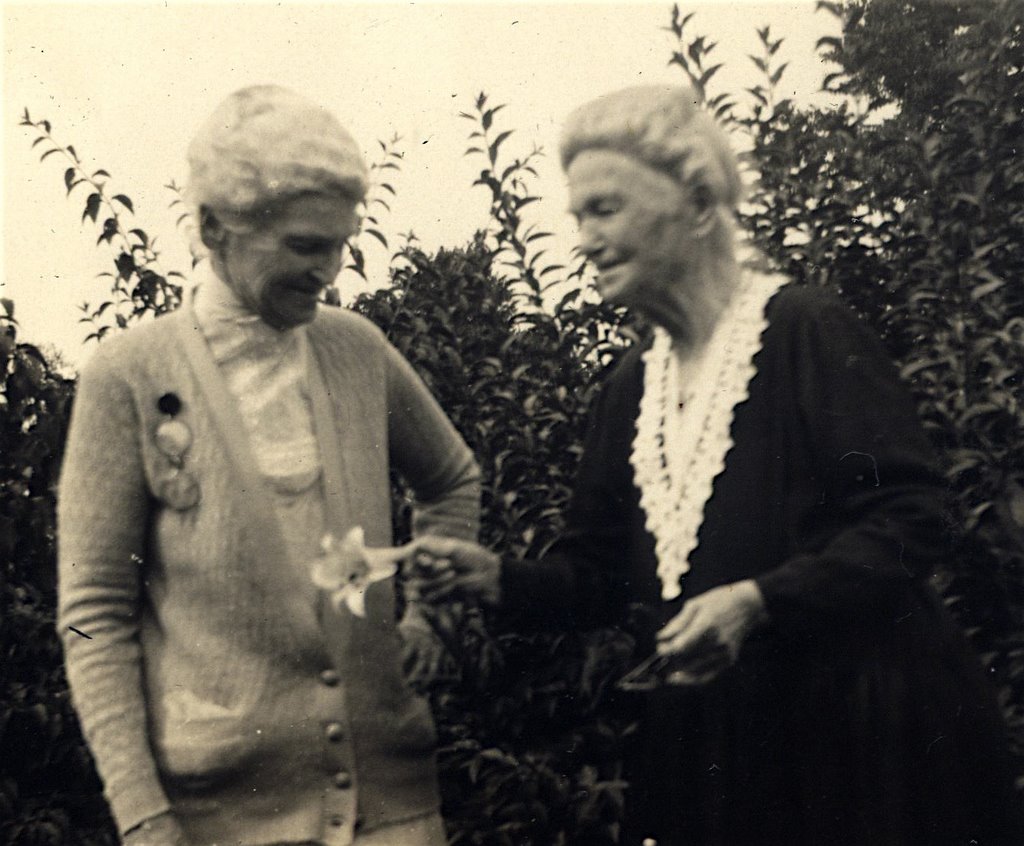
Here is my great grandmother, Lillie, inspecting her floral namesake with her dainty-footed mother, Piety (on the right).


Strange to think of these off-hand comments about gardens that no longer exist from people long dead.